
A lot of homeowners in Wayne believe a driveway cracks because the concrete was poured too thin, so the answer must be a thicker slab next time. What actually decides how a driveway holds up here is the ground under it and how water leaves the surface. Wayne sits on heavy lake-plain clay, the kind that stays soggy after a spring rain and swells when it freezes. Pour good concrete on poorly prepared clay and it can still heave, settle and crack within a few winters.
This post walks through how we approach driveway installation in Wayne, from the dig to the final control joints. The goal is simple. You should know what a solid job looks like before anyone breaks ground on your property.
What Wayne's Clay Does to a Driveway
Clay drains slowly. When water sits under a slab and the temperature drops, that water freezes and expands, pushing sections of concrete upward. When it thaws, the softened clay loses strength and those same sections can drop. In southeast Michigan that freeze and thaw cycle repeats many times between December and March.
The surface takes a beating too. Road salt tracked in from Michigan Avenue and the side streets soaks into the top of the concrete, and repeated freezing can cause scaling, where thin flakes pop off and leave a rough, pitted finish.
Many homes in Wayne date back several decades, and plenty of original driveways were poured on little more than native soil. Common signs that the ground has been working against the slab:
- Cracks that open wider every spring - A section that tilts toward the garage or the house - Puddles that sit in the same low spots after rain - A raised lip where the driveway meets the garage floor or the public sidewalk
How We Build the Base
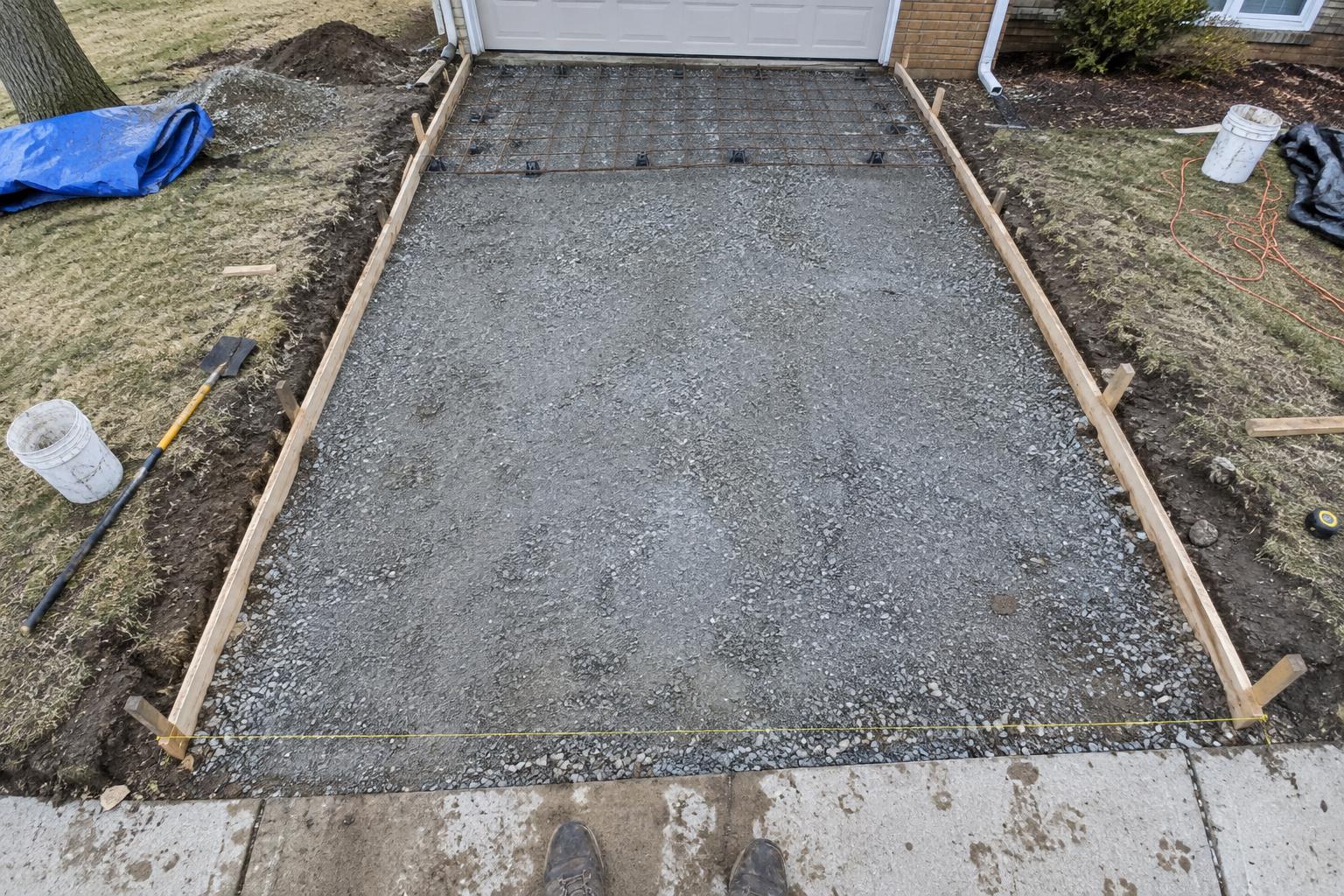
A new driveway starts with removing the old one. We break out the existing concrete, haul it away, and dig past the soft topsoil to firmer ground. That subgrade gets compacted so it is uniform. Soft pockets are where settling starts.
Next comes a crushed stone base, spread and compacted in layers. Crushed aggregate locks together, carries the load of a vehicle, and gives water a path to move rather than pooling directly against the bottom of the slab. On clay, that layer does a lot of the heavy lifting.
Grade matters just as much. We set the forms so the finished surface pitches away from the garage and the foundation, toward the street or the lawn. A driveway that sheds water quickly gives frost far less to work with. Where the slab needs extra strength, such as the apron in front of the garage or areas where heavier vehicles park, we place wire mesh or rebar on chairs so the steel sits inside the concrete where it can do its job.
The Approach, the Permit and the Sidewalk
The stretch of driveway between the public sidewalk and the street is called the approach, and it sits in the city right-of-way. Work in that area generally requires a permit from the City of Wayne, and the approach has to meet city standards for how it is built and how it meets the curb. We plan the approach as part of the full project so it lines up cleanly with your new driveway and with the public sidewalk crossing it.
Some homeowners in newer subdivisions around Wayne also have HOA rules to follow. Those can cover driveway width, finish, color, or whether a decorative border is allowed. It pays to check those rules before settling on a design, and we are glad to work from whatever guidelines your association provides.
Pour Day and Finishing
For Michigan driveways we use air-entrained concrete. The mix holds millions of tiny air bubbles that give freezing water room to expand, which helps the surface resist scaling and cracking through winter.
Once the concrete is placed, it is screeded flat, floated, and edged so the borders along the lawn are clean and rounded. A broom finish adds texture for traction on icy mornings. Then come the control joints, either tooled into the wet concrete or saw-cut shortly after. Concrete shrinks as it cures, and those joints give it a planned place to crack in a straight line, out of sight, rather than wandering across the middle of the slab.
After the pour we give you clear timing on when the driveway is ready for foot traffic and when it can take a car. For the first winter, it is smart to skip rock salt on the new surface and use sand for traction instead. A quality sealer also helps protect the concrete from salt and moisture over the years.
Options Beyond a Plain Slab
A new driveway is a good time to fix what has bothered you about the old layout. Common additions include:
- A driveway extension for a third vehicle or a trailer - A wider apron so cars can turn in without driving onto the grass - Stamped or decorative borders that dress up a plain broom finish - A new walkway connecting the driveway to the front door
Many Wayne homeowners also tie the driveway project into backyard plans. If you have been thinking about a slab for outdoor seating or a grill area, our Patio Installation work can be planned alongside the driveway so materials, finishes and drainage all match.
Planning Your Driveway in Wayne
Concrete is best poured when temperatures stay above freezing, so most driveway work happens from spring through fall. Booking your estimate early gives time to sort out the city permit and any HOA approval before the season gets busy.
Estimates are free. We come out, measure the driveway and approach, look at how water moves across your lot, and talk through options for size, finish and reinforcement. Call SC Concrete Services at (734) 720-9815 to set up a visit and get a clear plan for your new driveway.