
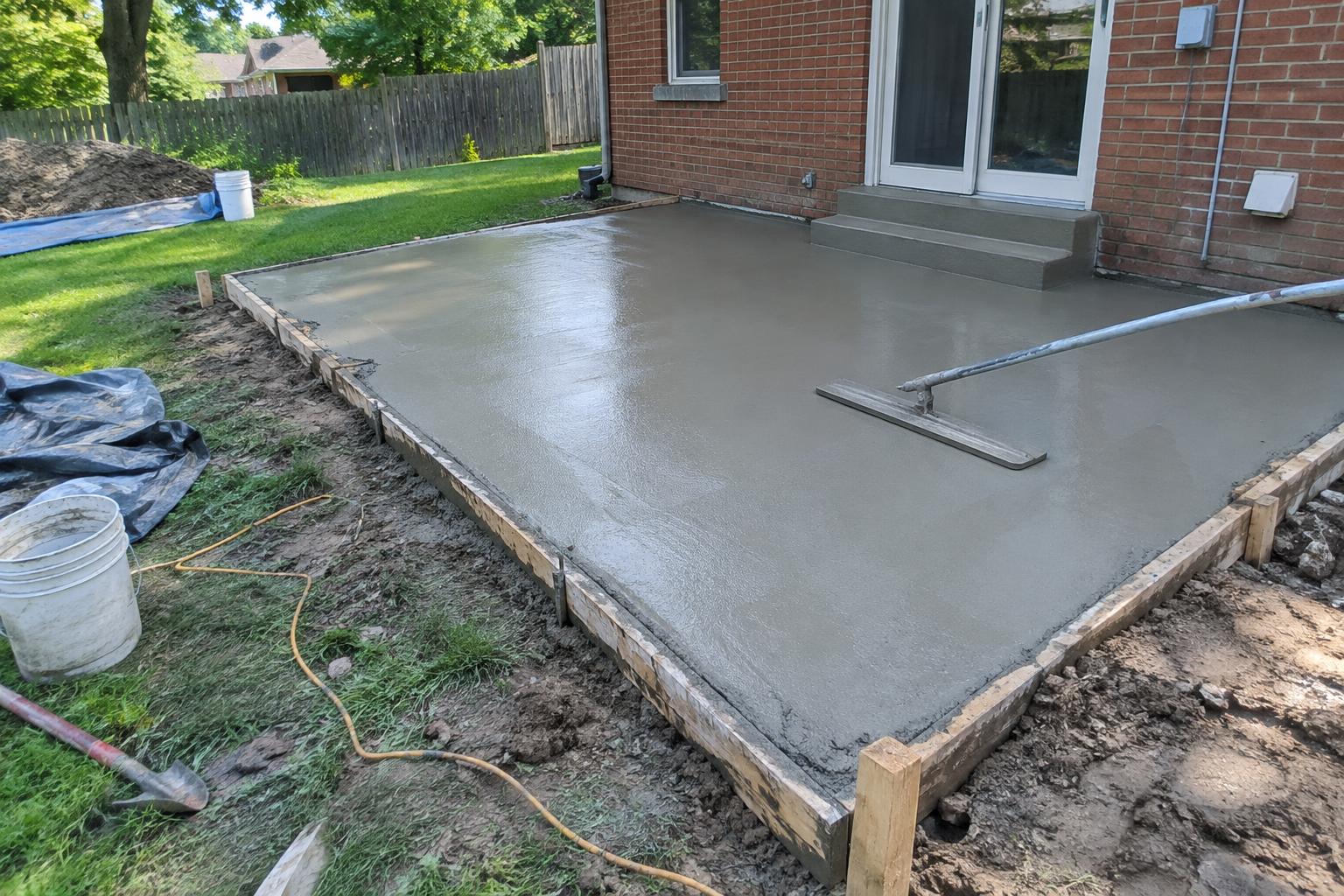
If you live in Plymouth, you already know the backyard situation. The ground back there is heavy clay that holds water, especially south and east toward the lake plain. After a wet spring the low spots stay soggy for days. Add a long winter of freeze-thaw and road salt tracked in on boots, and an old patio starts to crack, heave and flake. That combination is exactly what we build against when we handle patio installation in Plymouth.
This post walks through how the work actually goes, what matters in our soil, and the small decisions that decide whether a patio looks good for a long time or starts lifting in a couple winters.
Why Plymouth Soil Changes the Plan
Clay is the big factor here. It swells when it takes on water and shrinks when it dries, and it holds frost longer than sandy ground. North and west of town you sometimes hit rolling glacial till or sandier pockets that drain better, but most Plymouth backyards sit on clay that moves with the seasons.
That movement is what pushes slabs up at the corners and opens cracks. The fix is not thicker concrete alone. It starts underneath. We excavate down past the topsoil, then build a compacted gravel base that gives the slab a stable, draining layer to rest on. A good base lets water move instead of pooling under the concrete and freezing. We also set a slight slope so water runs away from the house and off the slab, usually around a quarter inch per foot. On flat clay lots that pitch is easy to miss, and it is the difference between a dry patio and a puddle at your back door.
How We Build the Slab
Once the base is compacted and graded, we set forms along the edges and run a string line to keep the shape true. Reinforcement goes in on chairs so it sits in the middle of the pour, not down in the dirt where it does nothing. For most patios we use steel mesh or rebar depending on the size and shape.
Then comes pour day. Wet concrete comes off the truck chute or the wheelbarrow, gets screeded level to the forms, and we bull-float the surface to tighten it up. We tool the edges, then cut control joints into the slab. Those joints are planned cracks. Concrete will always shrink as it cures, and the joints give it a clean line to crack along instead of a random split across the middle. For a patio we usually finish with a broom texture so the surface stays slip resistant when it is wet or frosty.
Decorative and Stamped Options
A patio does not have to be plain grey. Stamped and decorative concrete lets you get a stone or wood plank look with the texture pressed into the wet surface and color worked in. It reads like natural stone but stays one solid slab, which means fewer joints for weeds and salt to work into over the years.
If you want the patio to tie into the front of the house, the same crew can match finishes across projects. Plenty of Plymouth homeowners pair a new patio with a Driveway Installation so the colors and textures feel like one plan instead of two separate jobs. We keep everything to the concrete work we actually do, so there is no guessing about who handles what.
Permits, HOA Rules and Right-of-Way
Plymouth has its own permit and inspection process, and the rules vary a little across Wayne, Oakland and Washtenaw County since we work the western suburbs around Westland too. A backyard patio is usually more straightforward than a driveway approach, which touches the city right-of-way, but you still want the setbacks and sizes right before any concrete is poured.
Newer subdivisions add another layer. Many have an HOA with rules about patio size, placement, and sometimes color or finish. We have seen approvals go sideways because a homeowner poured first and asked later. It is worth a quick check with your association before the project starts. We are glad to talk through what is typical so your plan lines up with both the city and the HOA.
Timing and Curing in Our Climate
Concrete does not care about your weekend plans. It cures on its own schedule, and our climate matters. Spring and fall are comfortable, but late fall pours need attention so the slab is not catching a hard freeze while it is still green. Summer heat can flash the surface too fast if we are not careful.
You can usually walk on a new patio within a day or so, but give it time before heavy furniture or a grill. We will tell you what to expect on your specific pour. One honest note on salt: deicing salt is rough on all concrete, and a new slab is most vulnerable its first winter. Sand works better on a fresh patio.
When you are ready, we offer free estimates on patio installation in Plymouth and will measure your yard, check the grade, and give you a straight plan.